
Startup Funding Brief · September 27, 2026 · 5 min read
Defense drones, vibe coding, and cheap humanoids reshape the funding map
This week's rounds reveal three distinct bets — autonomous defense hardware, AI-native software at scale, and sub-$2K robotics — each carrying different signals for founders raising right now.
Defense tech crosses into venture scale
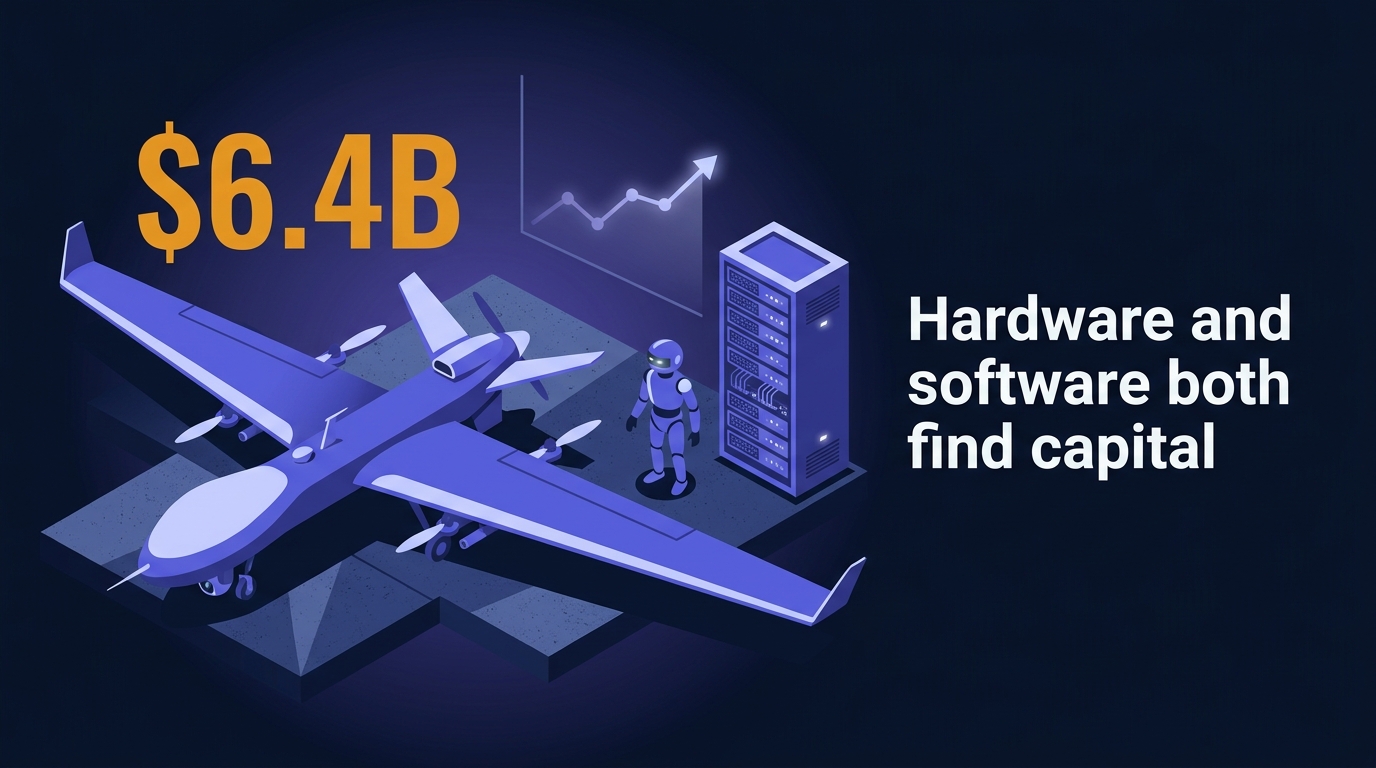
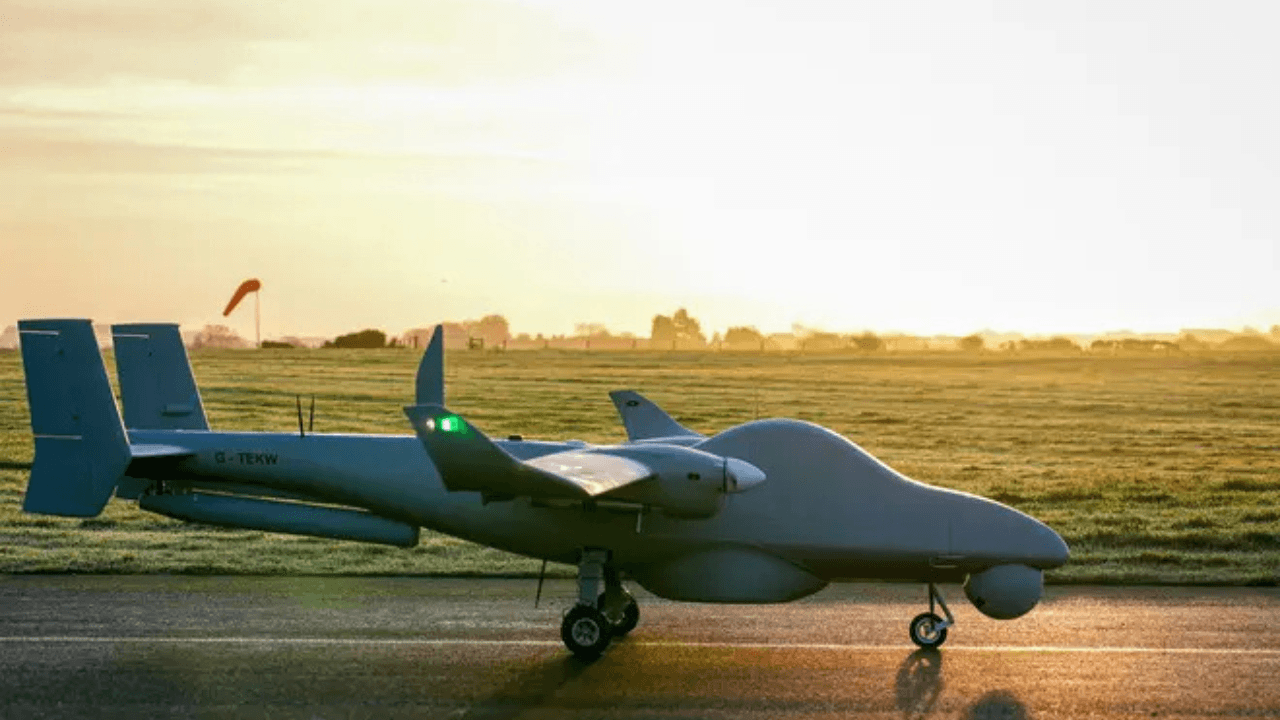
TEKEVER, the Portuguese-founded autonomous drone and AI systems company, announced the first close of a $580 million Series D this week, valuing the business at $6.4 billion, as tech.eu reported [1]. The round came on the heels of TEKEVER's selection for the British Army's £400 million CORVUS programme — a government contract that appears to have served as a de-risking signal for institutional investors including UC Investments and Baillie Gifford.
The structure matters as much as the size. A 'first close' at $580 million suggests the final round could be larger, and the involvement of a university endowment alongside a long-horizon public equities fund points to a broadening of the investor base now willing to underwrite defense hardware at growth-stage valuations. For founders in autonomous systems, robotics, or dual-use AI, the TEKEVER raise demonstrates that a credible government contract can unlock institutional capital that would otherwise stay on the sidelines.
AI-native software reaches revenue velocity that compresses timelines
Lovable's co-founder Fabian Hedin disclosed at the HumanX summit in Amsterdam that the vibe-coding platform has crossed $600 million in annualized revenue — up from roughly $500 million as recently as June, as TechCrunch reported [2]. That is $100 million in annualized revenue added in approximately three months, a pace that is unusual even by AI-era standards.
Hedin attributed part of the acceleration to a deliberate push into enterprise, with the company claiming two-thirds of Fortune 500 companies now use the product. That claim is unverified in the source material, but the revenue trajectory itself is concrete. For founders building AI-native developer tools or workflow software, the Lovable numbers set a new public benchmark for what 'fast growth' looks like in this category — and implicitly raise the bar for what investors will expect when evaluating comparable pitches.
Physical AI attracts capital at both ends of the check spectrum
Two robotics and physical AI deals this week show the category is drawing investment across very different stages and geographies. In China, Ant Group led a 500 million yuan pre-Series A into Lexiang, the company behind the Bridge humanoid — an 88-centimeter, sub-13-kilogram robot priced under $1,300, as robotbelt.com reported [4]. The founder, Guo Renjie, is 28 years old and previously ran Dreame's robot-vacuum business, managing more than 1,500 people before starting Lexiang. The sub-$1,300 price point is the headline, but the operational background of the founder is what likely gave Ant sufficient confidence to write a pre-Series A check into consumer-facing hardware.
On the data infrastructure side, New York-based Midcentury emerged from stealth with a $15 million seed round to build training data for physical AI, as Ventureburn reported [5]. The company launched an egocentric dataset of over two million hours of human behavior, along with a cloud simulation platform called Matrix. The framing — first-person human action data used to train robots, analogous to web scrapes used to train Signal Copilots — positions Midcentury as picks-and-shovels infrastructure for the broader robotics wave rather than a robot maker itself. The $15 million seed is a relatively modest check for deep-tech, which may reflect the early state of the market for this specific data type.
Separately, Cambridge-based Lila Sciences published results showing its AI-directed laboratory screened 2,942 catalysts for green hydrogen production in three months, identifying six high-performing material families, as the company reported [3]. Lila has not announced a new financing round in conjunction with this disclosure, so the funding implications are indirect — but the result is a concrete data point on what autonomous lab systems can compress in R&D timelines, a metric that climate-tech and materials-science investors are increasingly using to evaluate capital efficiency.
What the pattern means for founders raising this quarter
Taken together, this week's activity points to a market that is rewarding specificity. TEKEVER's raise was anchored by a named government contract. Lovable's leverage is an auditable revenue number. Lexiang's valuation rests on a shipped product at a price point low enough to create consumer demand. Midcentury is selling infrastructure into a robotics market that is visibly expanding. None of these stories is a 'vision round' — each has a concrete external validator.
For pre-seed and seed founders, the Midcentury and Lexiang deals are the most directly comparable in check size. Both suggest that investors will engage early in physical AI and robotics if the founder has domain depth and a clear theory of where revenue comes from, even before that revenue is fully realized. The TEKEVER and Lovable data points are more relevant to Series A founders, where growth metrics and external contracts are increasingly the price of admission rather than a differentiator.
This week, if you are raising
- If you are raising in defense, dual-use AI, or autonomous systems, identify a named government contract or procurement programme you can reference — TEKEVER's CORVUS selection appears to have been decisive in unlocking institutional capital at scale [1].
- If you are pitching an AI-native software product, prepare a month-by-month ARR table: Lovable's $100 million ARR gain in roughly 90 days has reset what investors consider a credible growth rate in this category, and you will likely be benchmarked against it [2].
- If you are building physical AI infrastructure or low-cost robotics hardware, lead with the specific external validator you have — a shipped product, a dataset milestone, or a named customer — because the Midcentury and Lexiang rounds both show investors are writing checks early when that anchor exists [4][5].
Sources
 [1]TEKEVER raises $580M Series D at $6.4B valuation - Tech.eutech.eu
 [2]Lovable's annualized revenue crosses $600M as vibe coding takes off | TechCrunchtechcrunch.com
- [3]How an AI-run lab cracked open green hydrogen's catalyst problem | Lilalila.ai
 [4]The 1997-born founder backed by Ant just shipped a sub-$1,300 humanoidrobotbelt.com
 [5]Midcentury $15M Seed for Physical AI Training Data - Ventureburnventureburn.com